


Of course. Here is an introduction to famous Yixing teapots in English, structured to be informative and easy to understand for both enthusiasts and newcomers.
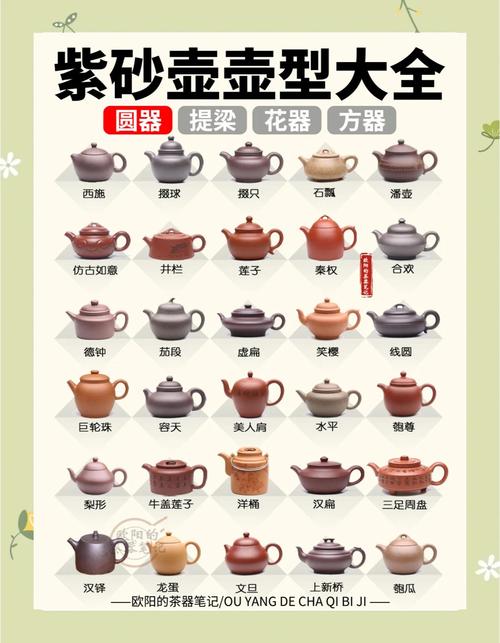
An Introduction to Famous Yixing Teapots: The Art of Zisha
Yixing teapots, crafted from the unique "Zisha" (purple clay) found only in Yixing, China, are world-renowned for their beauty, functionality, and deep cultural significance. Unlike porcelain, Zisha clay is porous, which allows the teapot to absorb the flavors and aromas of the tea brewed in it over time, enhancing the taste with each use. This process is known as "seasoning" the pot.
The history of Yixing teapots dates back to the Song Dynasty, but they reached their artistic zenith during the Ming and Qing dynasties, when master artisans began signing their works, elevating teapots from simple vessels to celebrated art pieces.
Here are some of the most celebrated and historically significant Yixing teapot names and styles.
The "Shi Dafang" Teapot (时大方壶)
- Era: Late Ming Dynasty (c. 1573-1644)
- Artisan: Shi Dabin (时大彬), arguably the most legendary Yixing potter of all time. He was a master potter from the Shi family, which produced several generations of great artisans.
Introduction: The "Shi Dafang" teapot is not a specific design but a term for teapots made by Shi Dabin himself. His work is considered the gold standard for classical Yixing teapots. He was known for his meticulous craftsmanship, often using his own hands to shape the clay instead of relying on assistants. His pots are celebrated for their elegant, understated forms, balanced proportions, and the subtle, natural texture of the Zisha clay.
Significance: Shi Dabin pioneered the shift from larger, more ornate teapots to smaller, more refined ones that were better suited for the "gongfu cha" (tea ceremony) style that was emerging. His signature, often carved or stamped on the base, is a mark of supreme quality and authenticity. Owning a pot by Shi Dabin is like owning a masterpiece from the Leonardo da Vinci of Yixing pottery.
The "Manshoushi" Teapot (曼生壶)
- Era: Qing Dynasty (c. 1820s)
- Artisan Collaboration: Yang Lanshu (杨彭年), the master potter, and Chen Mansheng (陈曼生), a renowned scholar, calligrapher, and official.
Introduction: The "Manshoushi" teapot is not a single shape but a famous collection of teapots designed by Chen Mansheng and crafted by Yang Lanshu. This collaboration marked a revolutionary moment in Yixing history. Chen Mansheng, an avid tea lover, would design the teapot's form, handle, and spout, and then he, along with his literary friends, would carve inscriptions of poetry, paintings, and seals directly onto the clay body of the pot.
Significance: This partnership elevated the Yixing teapot to a new level of artistry. It became a "literati" object—a fusion of pottery, calligraphy, painting, and poetry. The inscriptions often had witty, philosophical, or humorous themes, turning each teapot into a unique piece of art. The "Manshoushi" style is one of the most sought-after and influential designs in the history of Yixing pottery.
The "Shi Piao" Teapot (石瓢壶)
- Era: Qing Dynasty / Early Republic of China
- Artisan: Gu Jingzhou (顾景舟) (1915-1996), the "Master of Modern Yixing." While the form predates him, his version is considered the definitive masterpiece.
Introduction: The "Shi Piao" (literally "Gourd Ladle") is one of the most classic and beloved teapot shapes in Yixing. It is characterized by its sturdy, pyramid-like body, a gracefully curved and powerful spout, a loop handle that is comfortable to grip, and a crisp, angular lid. The shape is deceptively simple, yet achieving perfect balance and proportion is extremely difficult.
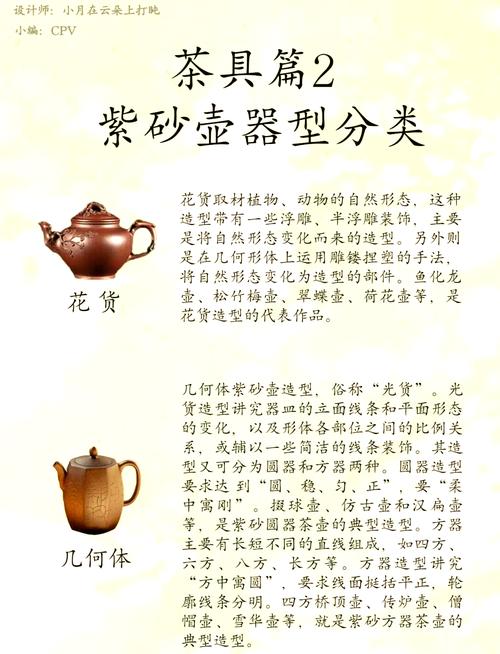
Significance: Gu Jingzhou's interpretation of the Shi Piao is legendary. He refined the form to near perfection, with clean lines, impeccable craftsmanship, and a powerful, masculine elegance. His pots are often called "the great masterpieces of the 20th century." The Shi Piao shape is a favorite among modern collectors and potters alike for its timeless beauty and excellent tea-brewing performance.
The "Gu Gao" Teapot (顾 Stamper)
- Era: Qing Dynasty
- Artisan: Gu Yanling (顾暎林), also known as Gu Gao.
Introduction: This teapot is famous not for its shape, but for its maker's mark. The body of the teapot is unadorned and relatively simple, but the base is stamped with the powerful, four-character seal "Gu Gao Zhi" (顾暎林制), which means "Made by Gu Gao."
Significance: The fame of the "Gu Gao" teapot lies in the sheer quality and reputation of Gu Gao himself. He was one of the "Great Five Masters of the Qing Dynasty" and was known for his incredibly high standards. A teapot bearing his mark was a guarantee of superior craftsmanship. It represents a philosophy where the maker's reputation is so strong that it overshadows the need for elaborate decoration. It is a testament to the idea that ultimate quality speaks for itself.
The "Guan Ni" Teapot (掇只壶)
- Era: Qing Dynasty / Early Republic of China
- Artisan: Gu Jingzhou (顾景舟)
Introduction: The "Guan Ni" (also known as "Duo Zhi") is another iconic shape perfected by Gu Jingzhou. The name is derived from the verb "duo," meaning "to gather" or "to pick up," as the shape resembles a classic Chinese wine vessel made by piecing together multiple sections. It has a full, rounded body, a short, elegant spout, and a well-proportioned handle. The overall impression is one of stability, grace, and grandeur.
Significance: Gu Jingzhou's "Guan Ni" is celebrated for its perfect symmetry and the masterful way he handles the transitions between the body, spout, and handle. It demonstrates his deep understanding of form and space. This shape is considered a pinnacle of "round-body" teapot design and is highly prized for its aesthetic appeal and its ability to brew tea evenly and beautifully.
Conclusion
These famous Yixing teapots represent more than just functional objects; they are cultural artifacts that embody the philosophy, artistry, and history of Chinese tea culture. From the pioneering work of Shi Dabin to the literary collaborations of the Manshoushi and the masterful refinements of Gu Jingzhou, each pot tells a story of craftsmanship, innovation, and a deep reverence for the art of tea.